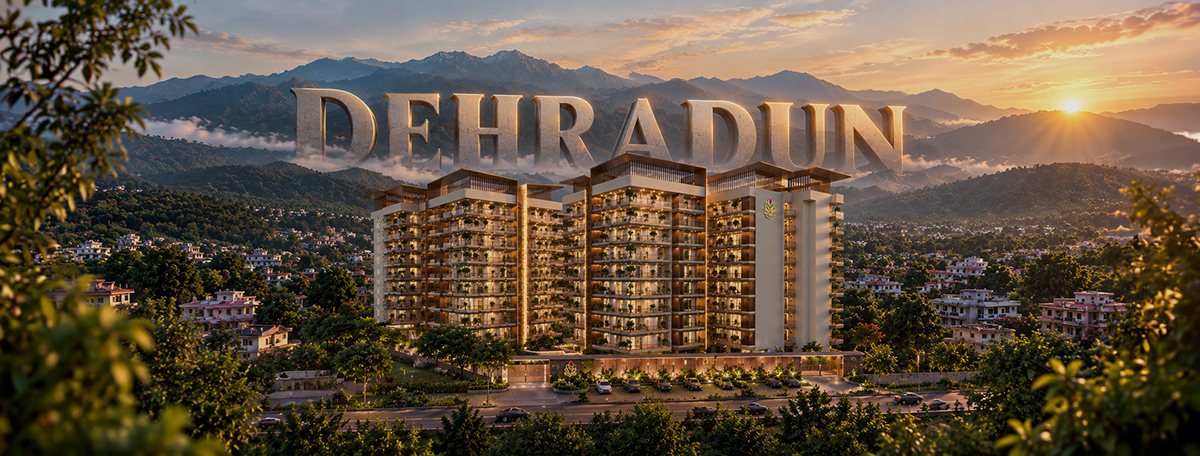
Why Invest in Dehradun in 2026? A Complete Real Estate Investment Guide
Ten years ago, Dehradun meant two things to most people outside Uttarakhand: boarding schools and retirement. Send the kids to Doon School, or move there once you're done working. That's not really true anymore, and hasn't been for a while. These days Dehradun gets mentioned in the same breath as Indore or Coimbatore when people talk about Tier-2 real estate, and it's not just because the air is better.
So if you're actually weighing this, here's what's moving the needle, some real numbers, and a few things most guides on this topic don't bother mentioning.
The Expressway Changes the Math
Start here, because almost nobody puts this front and center and it's arguably the biggest thing to happen to this city in a decade. The Delhi-Dehradun Expressway isn't "coming soon." Prime minister Modi ji inaugurated it on April 14, 2026. It's a ₹12,000 crore, 213-km stretch, and it's been open and running since. Drive time from Delhi dropped from five or six hours to about two and a half.
Think about what that actually does. It's the difference between "let's plan a weekend trip" and "I could live here and still make a Tuesday meeting in Delhi." Land along Haridwar Road and the NH-7 corridor, the corridors closest to the expressway, is already reflecting that shift in price.
There's more feeding into this too. People keep leaving the NCR because of the air and the traffic and honestly just the exhaustion of it, and Dehradun is close enough now that it's a real alternative rather than a compromise. Retirees, remote workers, second-home buyers, it's not only locals driving demand anymore.
Schools matter here more than in most cities this size. Doon School, Welham Girls, that reputation isn't just marketing, and it keeps rental demand fairly steady from families who moved specifically for the education. If that's part of your calculation, actually check the distance from whatever home you're considering to the schools you care about. Don't just trust a brochure map with a school icon dropped somewhere vaguely nearby.
Connectivity elsewhere has improved too, Jolly Grant Airport has more routes than it used to, and the roads to Rishikesh, Haridwar, and Chandigarh have gotten better. For a state capital this size, having road, rail, and air all reasonably solid isn't something you can say about many comparable cities.
Where the Money's Actually Going
Three areas keep coming up in every market conversation, so let's just go through them plainly.
Rajpur Road is the old-money end of things. Prices for a 3BHK run ₹90 lakh to ₹1.5 crore. The infrastructure's mature, resale is easy, but Rajpur Road remains one of Dehradun's established premium residential belts. Entry prices tend to be higher than in many emerging locations, but buyers are paying for an established neighbourhood, access to everyday amenities, and limited availability of new land.
Sahastradhara Road is a step down price-wise, around ₹70 lakh to ₹1.2 crore for a similar unit. Professionals like it for the views and the newer construction. One catch: part of the road physically dead-ends, which limits how much further it can grow.
NH-7 and the Haridwar Road stretch are where most of the actual momentum is right now. Cheaper entry point, direct highway access, close to the airport, ISBT, and the railway station. This is also where most new township projects are landing, which tells you something about where developers think the smart money is headed.
Hathibarkala doesn't get talked about as much as those three, but it's worth a mention. It sits close to the city core, near schools, hospitals, and everyday shopping, without the commute penalty of the outer corridors. For buyers who value established city access over highway-adjacent development, Hathibarkala offers a different proposition. Once they stop chasing highway-adjacent land and start thinking about actual daily life.
Apartments have quietly become the default now too, over standalone houses. People care about security and upkeep almost as much as square footage these days. Plots near the highway corridors are the other thing worth watching, though land takes more patience and more homework than a flat you can walk into.
The Stuff Nobody Mentions
Check the RERA number yourself. If the project falls under RERA registration requirements, check its UKRERA registration yourself, and looking it up takes maybe five minutes on the portal. Match what the developer told you against what's actually listed there. Sounds obvious, I know, but it's the single step that catches most of the problems people run into six months later. If a developer hesitates when you ask for their registration number and site address, that hesitation is the answer.
Circle rate and market rate aren't the same number, and that trips people up constantly. Stamp duty gets calculated on whichever is higher, and it sits close to 5%, with a rebate if you register the property in a woman's name. Get the current circle rate before you start negotiating price. It sets your minimum tax bill no matter what you end up paying for the property itself.
It's also why land in these zones tends to hold value better, which caps how much can actually get built near forest boundaries, mostly through Floor Space Index limits. This is a big part of why you don't see Gurugram-style towers here, and honestly, it's also why land in these zones tends to hold value better. There's a natural ceiling on how much anyone can flood the market. Worth asking a developer how their construction actually measures up against these rules, not just whether they technically clear them.
If you're not from Uttarakhand, buying agricultural land comes with limits, the state caps how much a non-resident can pick up without special permission. Doesn't usually affect a standard flat or a residential plot inside municipal limits, but if you're eyeing something bigger, get a local lawyer to check before you get too far into it.
And rental yields here are unremarkable, somewhere around 2 to 3% gross annually. Lower than what you'd get in a metro's outer suburbs. The real argument for Dehradun is appreciation and lifestyle, not rental income, and anyone telling you otherwise is either misinformed or selling you something.
So, Worth It or Not?
The growth here is real, and now that the expressway's actually running instead of "planned for next year," the connectivity argument holds up in a way it didn't three years ago. But this isn't a market that spikes. It's slow and steady, and it rewards people who do the boring parts, clean titles, verified RERA numbers, locations near real infrastructure rather than just a nice view from the balcony.
Before you sign anything: check the RERA number yourself, get the circle rate in writing, and go see the site on a dry day and a rainy one, because those are two very different experiences of the same plot. Dehradun's upside is real. It just tends to go to whoever bothers with the unglamorous checking, not whoever reads the nicest brochure.